The Full Conversation: Inside the Mind of Daniel Holter
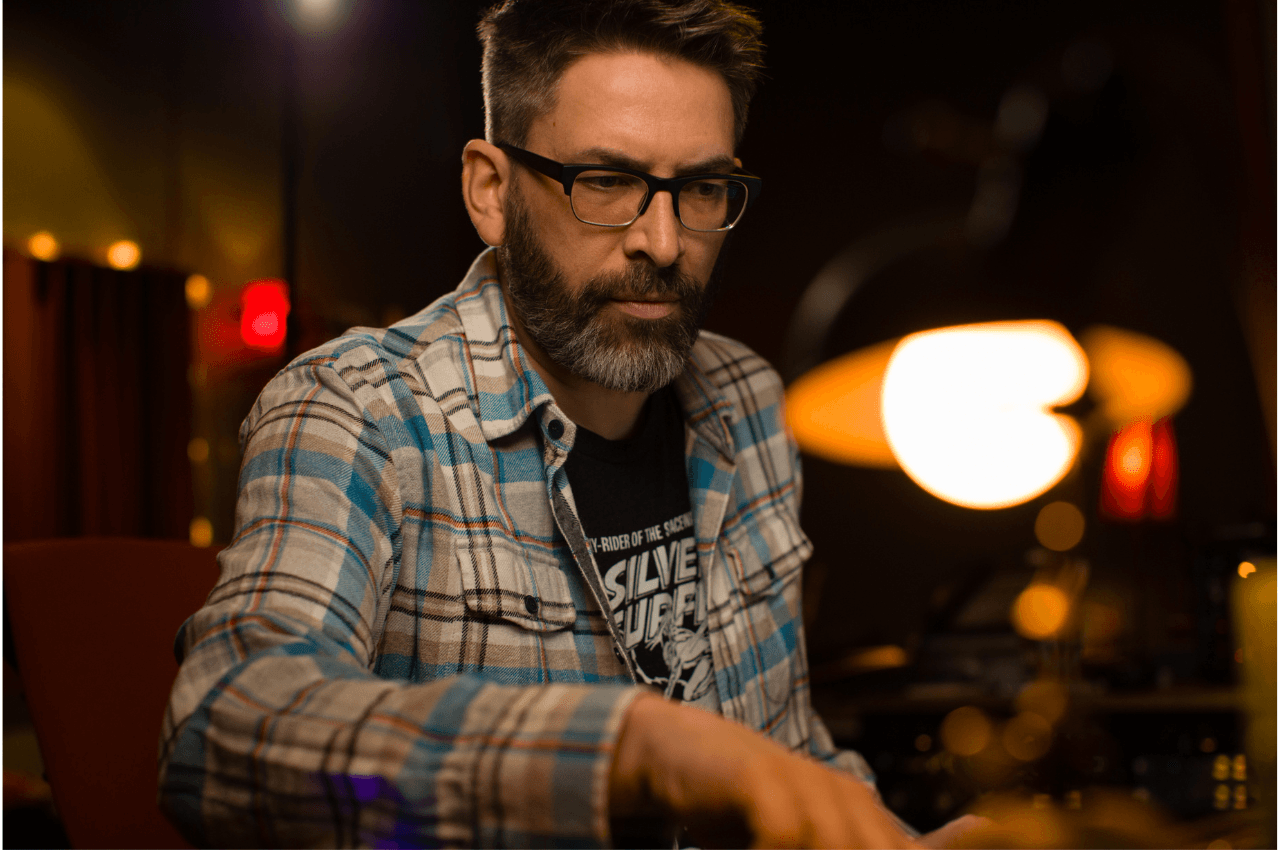
Earlier this month, Universal Production Music published quotes from me for their Spotlight blog drawn from an interview I did with their marketing team—a distillation of answers I gave to a few questions about production music, overall catalog philosophy, and how my thinking has evolved across three decades in this business.
With their permission, I'm posting the full Q&A here. Not because anything was lost or misrepresented in their edit/highlights (it wasn't) but because the longer answers contain context and texture that feels worth preserving somewhere. There’s a lot in here that relates to how I view the industry at large and situations outside my own work… and relevant to the Advisory sessions I offer from time to time.
So here, for my own Journal, is where the unabridged version lives. If you have any questions about the things discussed here, I welcome them in the comments that follow below.
UPM: You've built, sold, and rebuilt multiple catalogs across different eras of the industry. What do you understand about production music today that you didn't 10–15 years ago, and what do most people still get wrong?
DH: The thing nobody tells you early on is that success in production music isn't really about the music itself. It's a publishing and infrastructure business that needs music to promote and sell, but the business side is a much bigger task than simply registering one's songs. That realization took me too long to fully internalize, and I say that as someone who has now built, sold, and rebuilt catalogs across three decades and multiple ownership changes—including one catalog (Velocity) I sold to Zomba/BMG over 20 years ago that eventually found its way to Universal Production Music. Which adds a certain poetry to being here now.
There are tasks inside the machinery of this industry that require outsized attention, especially for those of us who come at this from the artist's perspective and the "pure" act of creation. By all means, one should keep making music, keep reinventing and finding new inspiration, keep moving forward. But what happens beyond the music that's required for long-term success is something far less sexy at face value: metadata that holds up across platform changes, delivery schedules your partners can depend on, catalog coherence that builds a recognizable identity over years rather than quarters. The music itself was never the difficult part for me.
I feel like the broader market still hasn't reckoned with this reality, and an entire ecosystem has grown up around that gap. I've taken to calling it the Music Dreams Industrial Complex—courses, communities, and content built around monetizing the aspiration to get your music licensed, without delivering the foundational knowledge that actually builds careers. It sells the dream of the placement rather than the discipline of the catalog. The composers who last in this space figured out, usually the hard way, that they're running a publishing business. The ones who don't figure that out… well, they are perfect customers for the MDIC.
UPM: The License Lab has evolved significantly over time. What feels different about this current chapter, and what are you doubling down on now?
DH: When we launched in 2011 we were releasing around 80 albums a year across multiple labels, trying to reach critical mass through volume and content partner output. That wasn't wrong for where we were—it's wise to build the foundation before you can put much of anything interesting on top of it, of course. We spent a few years getting the "basic five food groups" into the catalog: evergreen collections every library needs, the bread and butter that earns reliably across placements. That foundation has been in place now for years, and this chapter is about something different entirely—especially now that we are within the Universal ecosystem where so many evergreen releases already exist.
So we're doubling down on projects that most independent libraries don't have the time, budget, or appetite for. Unusual genre combinations. Niche trends. Deep concept albums that take a long time to get right. And a deliberate investment in humans… real studio sessions, real live rooms, real air moving. In an era when AI-generated production is flooding the market, the thing that becomes genuinely scarce is music that couldn't have been made any other way.
We recently reorganized our catalog (originally 10 labels) into two distinct new homes at Universal Production Music—License Lab Production Music and License Lab Song Catalogue—and we're moving into this chapter with more intentionality than we've ever had. The Botanica album from Eyeballs & Eardrums, released on Earth Day as part of Universal's Green Production Music effort, and continued vintage sessions on Analog Champion are just a couple of good indicators of where we're headed creatively.
UPM: You've described creating "purpose-built label concepts" rather than organizing music by genre. What does that unlock creatively or commercially that traditional structures don't?
DH: Genre is usually a listener-facing taxonomy. It describes what music sounds like, not what it's for or who built it or why. Organizing a production music catalog simply by genre serves the wrong end of the transaction—it tells a music supervisor what neighborhood the music might live in, but it doesn't tell them anything about the creative intelligence behind it or whether it was built with a specific use case in mind.
Every label in our catalog started from a different place. Analog Champion grew out of a team obsessed with gear restoration and vintage recording techniques—the label exists because those people exist, and the music sounds like it does because of how they approach writing and recording. UNDERscore was built around a structural innovation: every cue has a continuous 'A' section that grows without resolving, ending on a deliberate cliffhanger with an editable stinger… which means an editor can drop a resolved ending exactly where they need it. That's not a genre decision, it's an architectural one. LMNTL Records is about discovering and developing legitimate artist-level talent who've never made production music before, building their output around what we think of as the four elements of successful production music: craft, passion, form, and utility.
That's just three of our very different labels, with three very different motivations—none of which a standard genre folder would have produced.
UPM: There's a clear point of view across The License Lab's labels. How do you define taste in production music, and how do you know when something belongs in your world versus not?
DH: Three things have to be present: it has to sound good, it has to be usable, and it has to have something genuinely its own. The first two are mere table stakes, but the third is where most submissions fall apart (or, sometimes, win the whole pot). After hearing as much music as I have, it’s become very easy to identify when something is personal and specific versus when it's been assembled from reference tracks and typical genre conventions. So much of what gets made in this space melts together into one undifferentiated pile. Technically competent, functionally adequate, but completely forgettable. Which is sometimes what a project needs, I get that. But the production music space has so much of that already, and the onset of AI-generated tracks only exacerbates that supply. So these days I'm much more drawn to finding new approaches that offer something different.
The most common thing I hear from composers reaching out is that they "can do anything" and "love all genres" and are "super versatile." These days I always respond the same way: we don't need more music, we need your music. A specific perspective on how you hear things. An unusual combination of influences. Something that couldn't have come from anyone else. Creatively unique but functionally useful is a genuinely difficult thing to achieve, and when someone manages it—often with significant guidance along the way—it's one of the most satisfying things about this work. Almost our entire current roster is made up of composers I've cultivated and developed over time. You won't find a lot of their work elsewhere in the industry. That's not an accident.
Taste, for me as a producer, includes the ability to hear what something could become, not just what it currently is.
“Creatively unique but functionally useful is a genuinely difficult thing to achieve, and when someone manages it... it’s one of the most satisfying things about this work.”
UPM: You've talked a lot about building catalogs for longevity. What actually gives a piece of music long-term value in this space?
DH: Honestly? It's exceedingly difficult to predict. One of our best-earning tracks was nearly a throwaway that took me all of 30 minutes to write. Some of the pieces we've invested the most time and intention in haven't found the right project yet… and I'm genuinely fine with that. Weirdly proud of it, actually. The music is there. It's just waiting for the right supervisor to find it.
That unpredictability is the real lesson. If you can't reliably predict which specific piece will be the big winner, then longevity isn't really a property of individual tracks—it's a property of the system those tracks live in. The catalog is the bet, not the song. What gives music long-term value in this space is being part of a catalog that's large enough, well-organized enough, creative and durable enough that the right piece is available when the right moment arrives. That requires metadata discipline that holds up across platform changes and ownership transitions. It requires catalog coherence so that a music supervisor who trusted you once can find their way back to you. And it requires patience… the kind that doesn't mistake a quieter year for a failed catalog.
UPM: You started as a producer and composer, but your work has evolved into building systems and infrastructure. How do those two sides of your brain — creative and strategic — interact today?
DH: For a long time I would have described it as a gradual shift, the analytical side slowly becoming as important as the creation itself. Looking back more candidly, I think it's probably always been both simultaneously. But there was a specific inflection point in the last couple of years—not an easy one—where something I'd invested in creatively didn't continue the way I'd hoped. What came out of that, unexpectedly, was clarity. I'm not the trendy cool hip young producer anymore (if I ever was!) making emerging artist records and chasing whatever that chapter of my career looked like. And I don't miss it the way I thought I might.
What I've found genuinely fulfilling (and it’s surprised me a bit) is the brand and catalog architecture itself. The fact that it scratches the same creative itch for me. Designing a label concept that could only exist because of the specific human who anchors it. Developing a composer from their first uncertain submission to a catalog contribution that's distinctly theirs. Building something that compounds over decades rather than peaks and fades. Those are creative acts. They just don't look like sitting at a DAW. The medium may have shifted a bit, but my drive to create hasn't.
UPM: Across the License Lab catalog, are there a few projects or albums that you feel best represent what you're building — where everything clicked creatively and strategically?
DH: Three come to mind, and notably none of them are things you'd find anywhere else… which I think is the point.
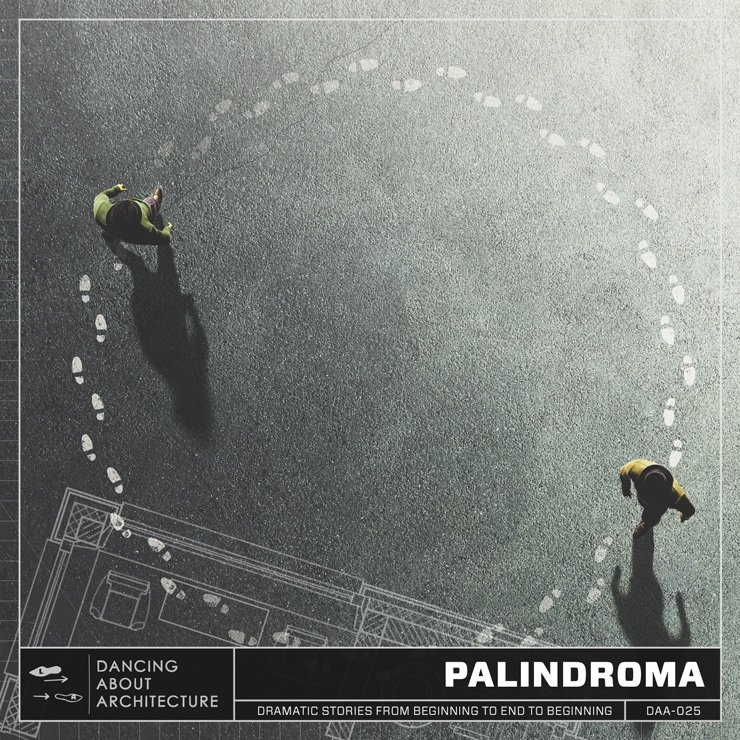
Palindroma on Dancing About Architecture is a high-concept album built entirely around palindromes — not just the track titles, which are all palindromes themselves, but the structural shape of each cue, which mirrors its own beginning in the outro.
We released it on Palindrome Day in 2022 (2/2/22). Composer Ehren Ebbage took the idea completely seriously and executed it flawlessly. It hasn't found its full audience yet. I'm not worried about it. I just love that we made it and put it into the world.
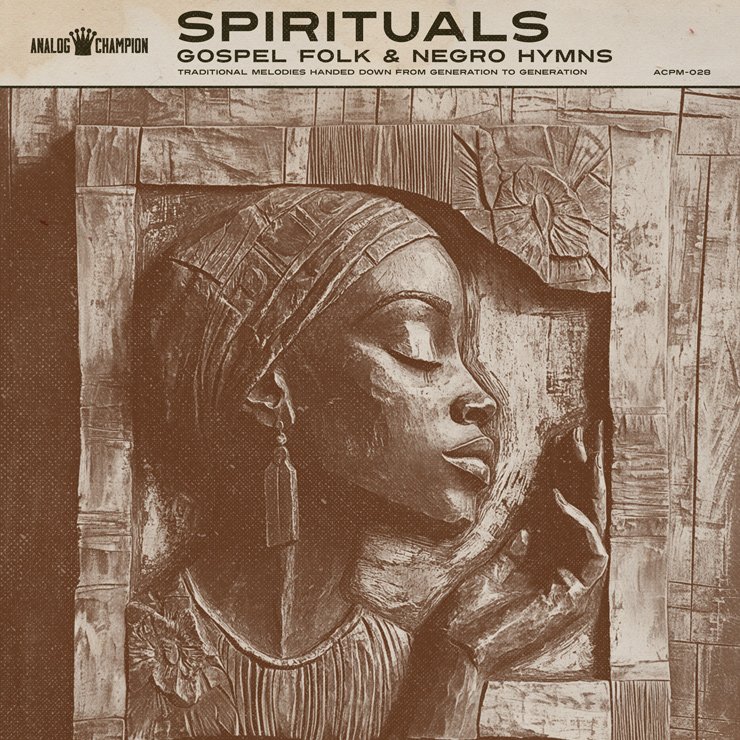
Spirituals on Analog Champion is a collection of public domain Negro spirituals arranged and performed by Seattle-based singer Tiffany Wilson and a choir, which I recorded at my Seattle studio THUD. using throwback and archival techniques — vintage microphones, analog tape, wire recorders.
The recording philosophy mirrors the subject matter.
That kind of coherence between concept and execution is not normal, and it reflects exactly what Analog Champion was built to celebrate.
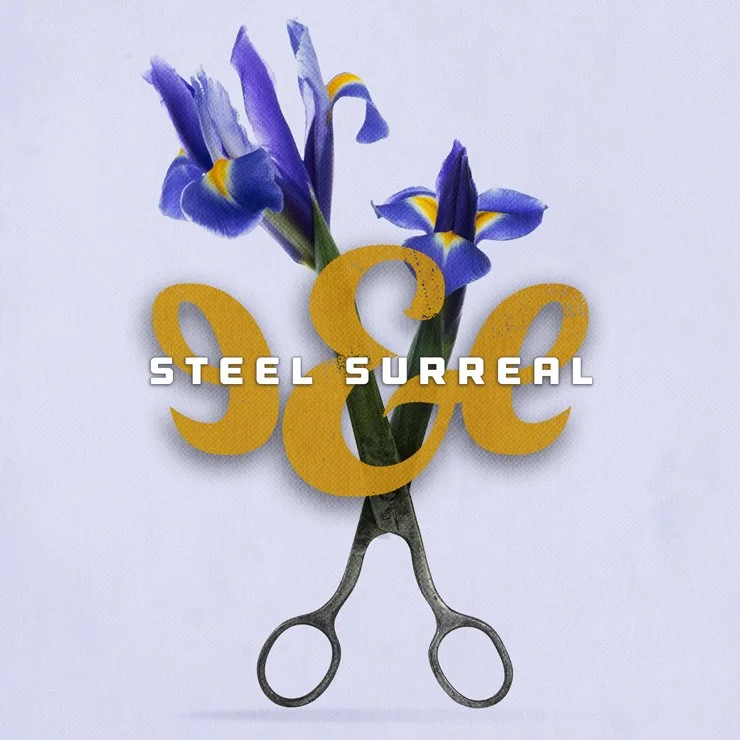
Steel Surreal on Eyeballs & Eardrums pairs Philippe Bronchtein's pedal steel and modular synthesizers with percussion from Jason McGerr (drummer for Death Cab for Cutie) and the result is something genuinely unexpected.
Atmospheric and melancholy but with subtle drive underneath it. McGerr is an artist-level collaborator who brought something to that session that couldn't have been programmed or approximated. That's the argument, right there.
The edited version of this conversation was published by Universal Production Music on May 14, 2026. You can read their version here.