There Are Two Music Businesses
Make Sure You Know Which IS WHICH
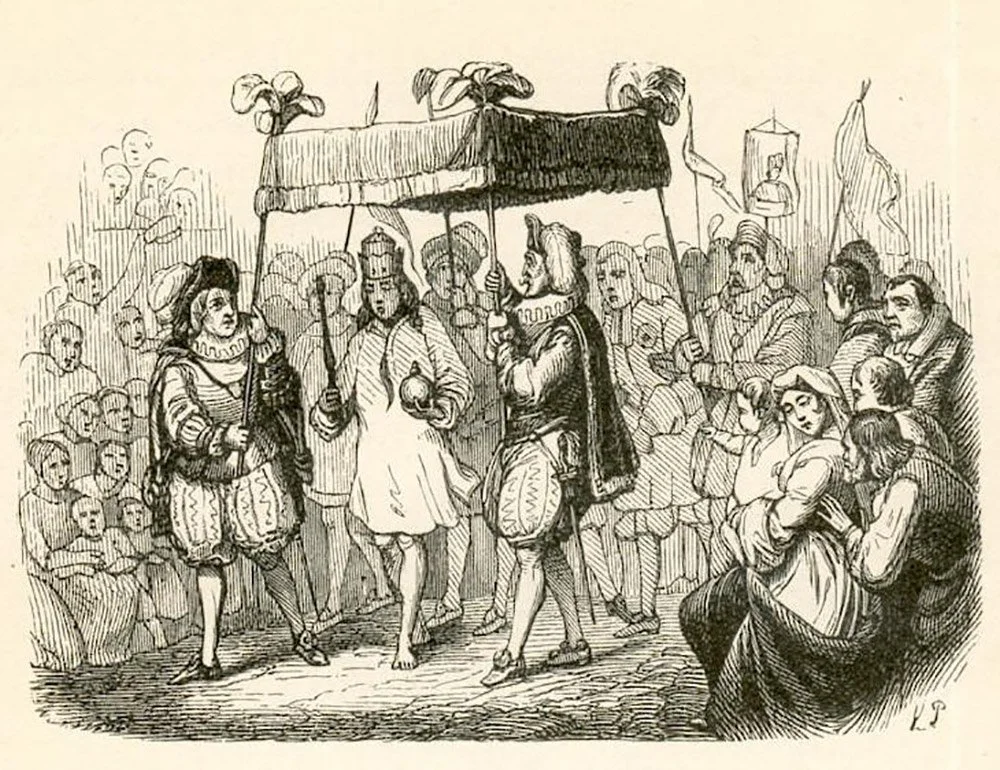
The Emperor’s New Clothes — Vilhelm Pedersen (1820 - 1859)
The music business is real, of course. It has real companies, real deals, real catalogs, real relationships that took years to build, and real money that moves through it every day. I've spent the better part of thirty years operating inside it.
There is also the business of selling the dream of the music biz. It is not the same thing. I've taken to calling that business the Music Dreams Industrial Complex. The name fits. And it would very much like you to not notice the difference.
The Music Dreams Industrial Complex exists because there is an enormous, renewable supply of people who want to make a living from music and don't yet know how the actual industry works. That's not a criticism… everyone starts somewhere, and the desire is understandable and completely legitimate. But desire is also exploitable, and an entire ecosystem has grown up around exploiting it. YouTube channels with production value that would make a network executive jealous. Masterclasses priced like graduate seminars. Courses promising that the right workflow, the right plugins, the right hustle mindset, the right morning routine will unlock passive income streams to make you wealthy and a successful career in music licensing or sync or production.
The thumbnails are confident.
The testimonials are curated.
The sales funnels are sophisticated.
The people running them, in my experience, are too often completely invisible in the actual industry.
I’ll state it clearly… the production music world—libraries, publishers, supervisors, composers, labels—is not as large as it looks from the outside. The people who matter in it, more often than not, we know each other… usually for many years. Not as a gatekeeping exercise, just as a natural consequence of working in the same space for long enough. When I encounter a name I don't recognize, my first instinct isn't dismissal… it's curiosity. Who are they? Who have they worked with? Where does their catalog live? What have they actually built?
With the Music Dreams Industrial Complex operators, that inquiry tends to go nowhere. The credits aren't there. The catalog isn't there. The industry relationships aren't there. What is there is a (sometimes) very large online audience and a polished sales operation built around selling the aspiration of a career rather than the actual substance of one.
They are not in the music business.
They are in the business of selling music dreams, which is a different and considerably more lucrative enterprise… at least for them.
The tell, if you're looking for one, is specificity. Real industry experience produces specific knowledge… knowledge about particular deals, particular companies, particular workflows developed through actual professional relationships. That experience produces opinions that might occasionally make someone uncomfortable, because they're grounded in reality rather than optimized for broad appeal. That experience produces a track record you can look up, not just testimonials you have to take on faith.
“The question worth asking isn’t whether someone has an audience—it’s whether they have a career. Not a content career. A music career.”
The Dreams Business (or MDIC) produces content optimized for the algorithm. It tells you what you want to hear because what you want to hear is what keeps you subscribed, enrolled, and spending. It avoids specificity because specificity is limiting and limiting is bad for reach. It speaks in the language of potential and possibility rather than the language of actual professional practice… because potential and possibility don't have to be verified.
None of this means that free or affordable education about music and the music business is inherently suspicious. There are genuinely knowledgeable people who share real information online, and some of them are excellent (I’ll link some below).
The question worth asking isn't whether someone has an audience—it's whether they have a career. Not a content career. A music career. Those are different things, and in a business built on reputation and relationships, the distinction is usually findable if you look.
Look at their credits. Look at their catalog. Look at who they've actually worked with and whether those people are real players in the industry. Ask whether their advice would hold up if you ran it past someone who has been doing this professionally for twenty or thirty years. Ask whether they're teaching from experience or selling hope dressed up as experience.
The music licensing business rewards people who do serious work seriously over a long period of time. It is largely indifferent to how many subscribers you have. If the person telling you how to build a music career has built theirs entirely on telling people how to build a music career, that's worth sitting with for a moment before you hand them your credit card.
. . .
Listed below are a few people I'd actually recommend listening to who are working in the music business, for the record. These are (probably) not the highest profile people in the “how to build your music career” niche, and that’s intentional… and I mean that as a compliment to each of them.
I reached out to several of them while writing this, and some were kind enough to add something here in their own words.
Jon Meyer

Flesh and Bone Music and Somerville Sounds, fluent YouTuber (Jon Meyer Music) who shares knowledge from actual catalog practice and his own work
“The best thing I ever did was embrace the grind. Write the best song I'm capable of, rinse and repeat. Production music is where I learned how to be consistent. How to turn on the faucet even when I felt dried up. That's how you earn the trust of people who can offer opportunities. Plenty of folks gave up when the returns were slim. The rest of us just kept showing up. Gluttons for punishment. But that's the game.”
Katy McIlvaine

Dawn Patrol music supervision and her company 58 Facets
"A lot of musicians are sold the idea that signing a deal is the goal they're working toward, when in fact it is just the first step. Musicians who thrive are the ones who stay engaged in their career growth day in and day out, long after a course is complete."
Farnell Newton

Tanvi Patel

Crucial Music and Streaming Chasers, catch her at conferences and seminars
"The 'field of dreams' mentality — 'if you build it they will come' — has never worked outside the Kevin Costner classic. You can't sit on your ass once the music is made. You have to work it, pitch it, promote it, perform it. Nobody gets discovered these days. Its. Hard. Work. Period."
Dean Krippaehne

Composer, author of A Composer's Guide to the Music Business (his site is here)
"It's a long road — building trust relationships, creating a quality catalog, earning a steady income stream. Listen, study, learn what music is being used in media and how. Mentally prepare yourself for years of toil as you grow in this unique area of the business. There is really no shortcut. Do the work."
JOEL GOODMAN

Emily White

Partner at Collective Entertainment, Founder of #iVoted Festival, and author/host of How to Build a Sustainable Music Career and Collect All Revenue Streams (a quality book that became a podcast)