Production Music's Identity Crisis: When 'Epic' Became Meaningless
I launched one of our labels, Picture Puncture, back in 2012 with the tagline "When everything is epic, nothing is epic."
I'm not sure the branding resonated quite the way I felt it myself… sometimes our own ideas are more grandiose in our heads than they end up being in the world, of course. But the concept and the motivation behind it are still sound.
Every year I sit down and write my own assessment of the licensed music industry… micro trends, macro shifts, the state of our catalog, our place in the larger scheme of things. This is that.
So last month I ran an experiment. I opened a bunch of production music library websites—friends, competitors, award-winning majors, boutique indie catalogs, the full spectrum—and searched "epic inspiring corporate."
The results were too often nearly identical. Across all platforms. Soaring strings over pulsing synths. Specific snare patterns that are apparently ubiquitous. An effected piano melody building to a string swell at exactly 1:45. Tempos between 120-130 BPM. Same chord progressions. Matched emotional arcs. Different composers, different libraries, different continents—completely interchangeable.
Have we keyword-optimized ourselves into oblivion?
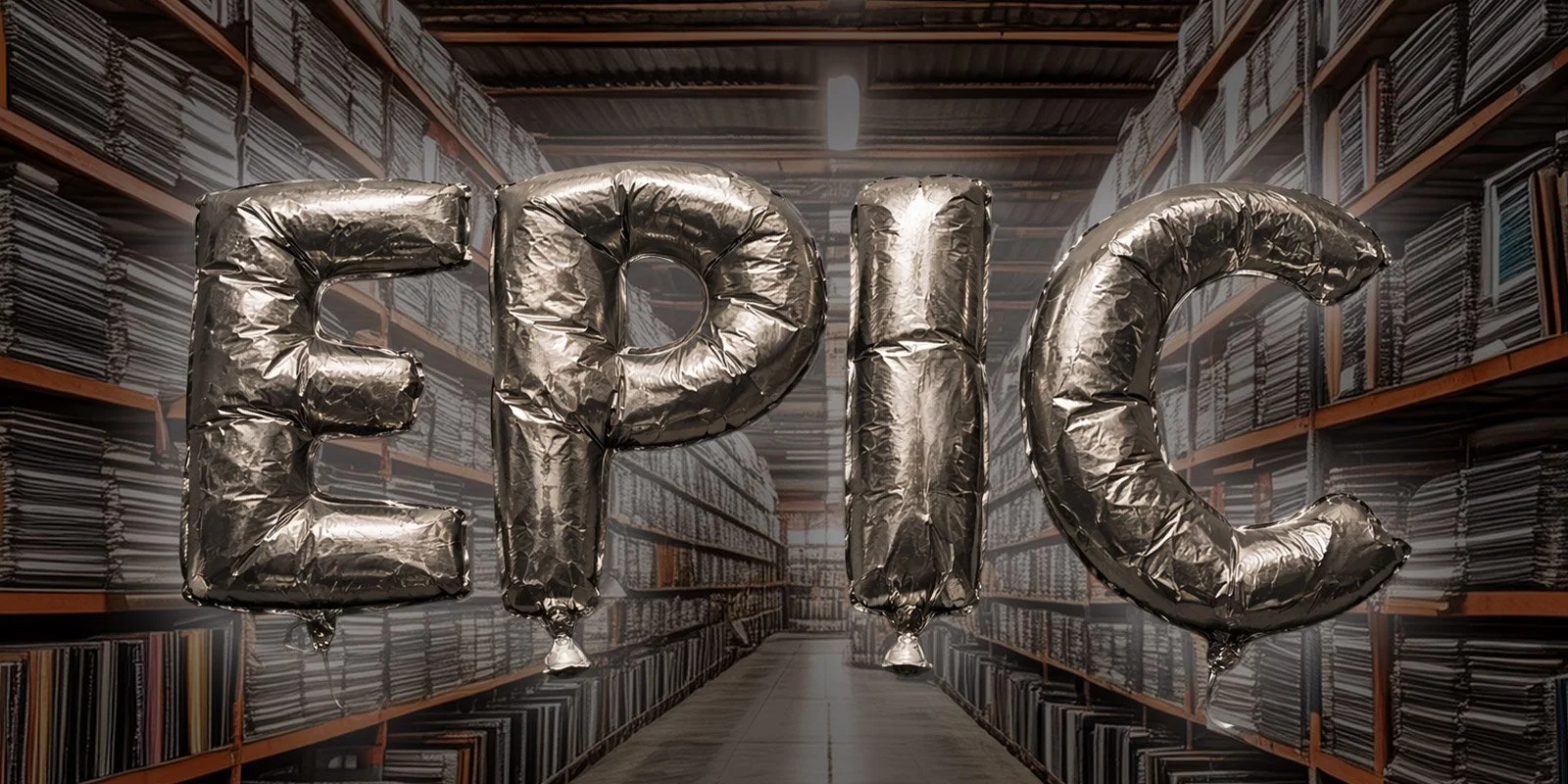
About ten years ago, production music libraries became obsessed with search engine optimization. Not Google SEO—internal search SEO. How do we make sure our tracks surface when music supervisors search our catalogs? The answer seemed obvious even if the long-term implications weren't: tag everything exhaustively. Use the words clients are searching for, again and again. If they're searching "epic," give them All Of The Epic.
The problem is that everyone had the same bright idea at the same time. When a term gets popular, too many libraries flood the zone with tracks optimized for it. Music supervisors search "epic inspiring corporate" and suddenly there are 10,000 results that all sound like they were created by the same algorithm following the same brief.
Which, increasingly, they were.
Composers started writing to the keywords instead of writing music. The brief became "we need tracks that rank for uplifting, motivational, and technology" instead of "we need music that captures the feeling of possibility." That distinction matters enormously. One produces music designed to satisfy a search query. The other produces music designed to make someone feel something.
We industrialized creativity and wondered why everything started sounding industrial.
The formula got encoded into muscle memory. It works. It checks all the boxes. Professional, competent, inoffensive. Expensive enough for prestige projects, accessible enough for corporate videos. Also completely disposable… and easily mimicked.
Sonic wallpaper—not the classic kind my mom loved, where you need an installer and a day of wall prep and industrial glue and that mess, my god the mess—but the temporary kind you stick on apartment walls. I fear we've papered over everything that made production music interesting.
Streaming platforms taught us the wrong lessons too. When Spotify's algorithm started promoting "Epic Motivation" playlists, sync catalogs took notes. They reverse-engineered the characteristics of those tracks into their creative briefs. This made some sense… follow the data, give people what they want.
But music for passive listening and music for storytelling are fundamentally different products. Spotify users want background music that creates a mood. Music supervisors want music that serves a specific narrative moment, that enhances character, that creates emotional context… or maybe ironic counterpoint. When you try to serve both masters, you end up with music that's fine for everything and perfect for nothing. Beige. Milquetoast. Temu inspiration.
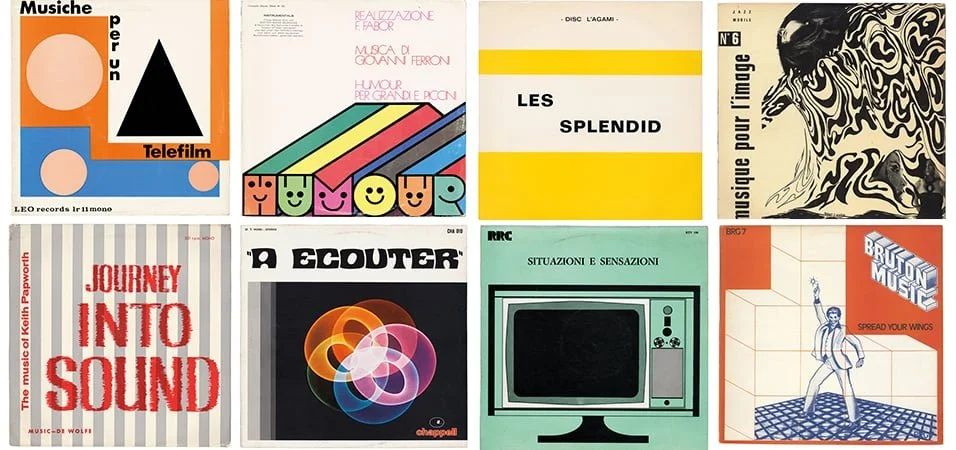
Back in the Golden Age, production music libraries had distinctive identities. KPM had a sound. Chappell had a sound. DeWolfe, Sonoton, Bruton—you could hear fifteen seconds of a track and make a decent guess which library it came from.
That distinctiveness came from limitations. Smaller budgets meant you couldn't hire an orchestra for every track, so you got creative with smaller ensembles. Geographic isolation meant a London library sounded different from Munich or Milan because they drew from different talent pools and cultural influences. Technical constraints forced choices… you couldn't layer 128 tracks and hope something worked.
Those limitations forced creativity. They forced composers to develop signature approaches. They created recognizable aesthetics.
Now we all have access to the same sample libraries. The same virtual instruments. The same tutorial videos teaching the same production techniques. The same AI tools suggesting the same chords from "proven" prompts. A composer in Seoul and a composer in São Paulo can make tracks that are sonically indistinguishable because they're working from the same template, optimizing for the same keywords.
Democratization of tools is genuinely wonderful. But the homogenization of this formerly quirky, idiosyncratic work is a red flag waving right in our faces… begging us to do something, anything, new and uniquely human.
When I talk to music supervisors, they describe the same frustration. Too many are forced to spend hours searching through massive catalogs, clicking through hundreds of tracks that blur together. They know what they don't want, but they often can't articulate what they do want because they don't know if it exists.
Our industry gave them more options than ever and somehow made it harder to find what they need.
The best record stores can have thousands of options and still feel like a peek behind the curtain of someone who clearly loves music. They're curated. Someone with taste has organized them in ways that reflect how humans actually think and search. Production music catalogs today are often organized like algorithm-driven Amazon warehouses. Efficient for logistics. Terrible for discovery of anything you didn't already know you wanted.
When I founded The License Lab, we were pushing back against exactly this. Instead of building a catalog that covers every possible search term, we created labels with specific conceptual identities.
"HypeKit" and "UNDERscore" aren't genre descriptions—they describe a curatorial vision.
"Three Ingredients Or Less" is an intentional creative constraint, not a keyword cluster.
"LMNTL Records" and "Analog Champion" tell you something about the aesthetics we're chasing.
This was commercially risky. It means we've deliberately passed on music that fits certain briefs. A supervisor searching "epic orchestral trailer" won't find a ton from us. We're fine with that. We'd rather be someone's only option for a specific sound than everyone's seventeenth option for a generic one.
Some music supervisors love this. They come to us when they want something that “doesn't sound like stock music,” when they need a project to have a genuine sonic identity. Others find it frustrating. They want comprehensive. They want to search "corporate uplifting" and have 500 options. Universal Production Music, who distributes our catalog globally, has dozens of labels that serve that need beautifully. We're the smaller indie brand inside that larger family, and we're proud to be “the weird one.”
When we recently consolidated several of our labels under a single umbrella on Universal's platforms (License Lab Production Music), I understood the logic—simplification, cleaner catalog organization, easier to explain to clients. But it does challenge why those labels exist as separate entities in the first place. "Modus Operandi" and "Organic Spark" and "Eyeballs & Eardrums" aren't arbitrary divisions. They represent different creative approaches, different sonic palettes, different use cases. Consolidating them makes us more findable in a database and potentially less findable to supervisors who know exactly what they're looking for.
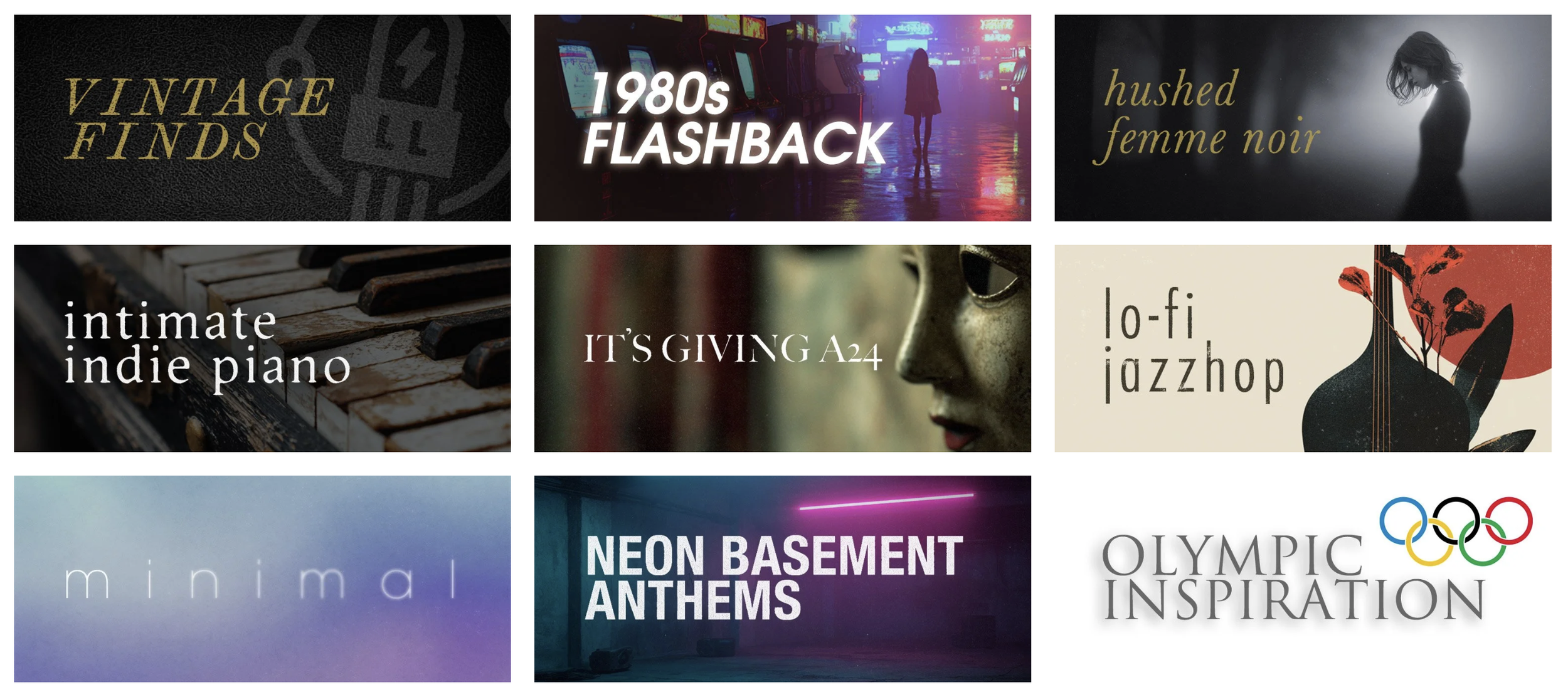
themed playlists from The License Lab
It's one reason we've started offering weekly inspiration playlists through our own License Lab DISCO catalog… a way to get fans of our specific labels straight to what they love, and a continuation of the unique playlist culture we've been known for since 2011.
I believe one of the central tensions in production music right now is this: distributors want scale and efficiency, catalog owners want creative identity. Both are trying to serve music supervisors, but with fundamentally different philosophies about how music supervision actually works.
My experience—thirty years of it as of this summer (!!)—is that the best placements come from relationships, not databases. A supervisor reaches out because they remember your catalog has that specific thing. They remember because it's memorable. It's memorable because it's distinct.
AI-generated music is now flooding every platform with infinite variations on every possible keyword combination. Want "epic inspiring corporate"? AI can generate a thousand unique tracks in that style by tomorrow morning. Literally.
This should terrify libraries that compete on volume and keyword coverage.
It should excite libraries that compete on curation and identity.
“When everything is epic, nothing is epic.” Indeed.
When everything is available, nothing is valuable.
When one option is clearly different, it becomes worth paying attention to.
I'm betting that music supervisors will increasingly want to work with catalogs they know, with human composers they can actually talk to, with music that has provenance and context and a point of view. The alternative is drowning in an ocean of perfectly adequate tracks that all sound like they emerged from the same training data.
The libraries that survive the next decade won't be the ones with the most comprehensive catalogs. They'll be the ones music supervisors remember. The ones with a signature. The ones that stand for something beyond efficient keyword optimization.
"Epic" became virtually meaningless because everyone chased it at once. The same will happen with whatever term comes next. The cycle will continue until we decide to step off the treadmill and make music that says something specific instead of trying to mean everything generically.
We stepped off that treadmill early. Thirty years into this, I'm still listening to my inner musician and leaning harder than ever into the weird, the limited, the meaningful, and the different.
———
Daniel Holter is the founder of The License Lab, a production music library based in Seattle, WA and distributed globally by Universal Production Music. Over a 30-year career, he has sold three catalogs to major publishers (Sony/ATV, Zomba/BMG, and Warner/Chappell) and continues to champion independent, human-crafted music for sync licensing.