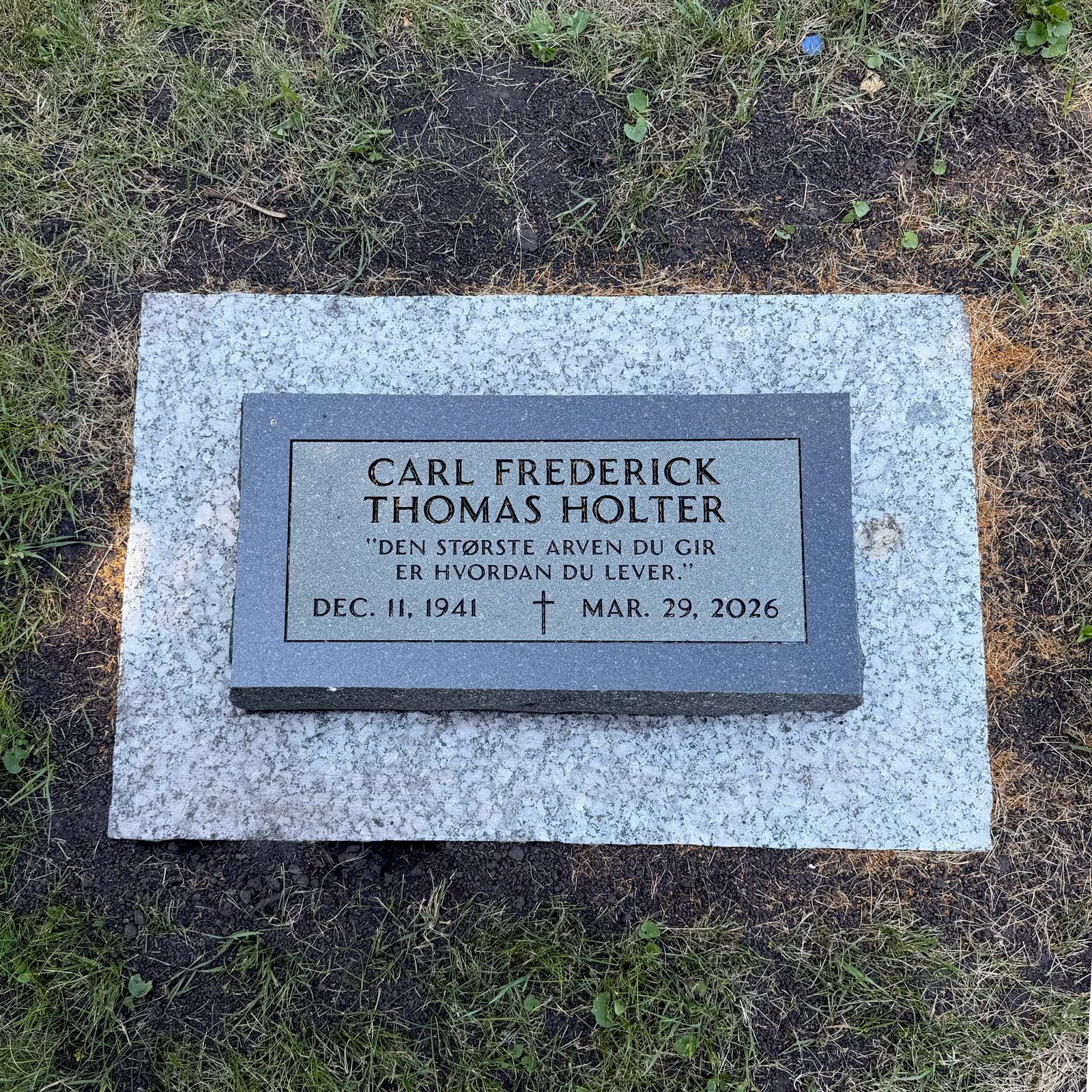
Carl Frederick Thomas Holter
What I shared at my Dad’s Celebration of Life in West Bend, WI
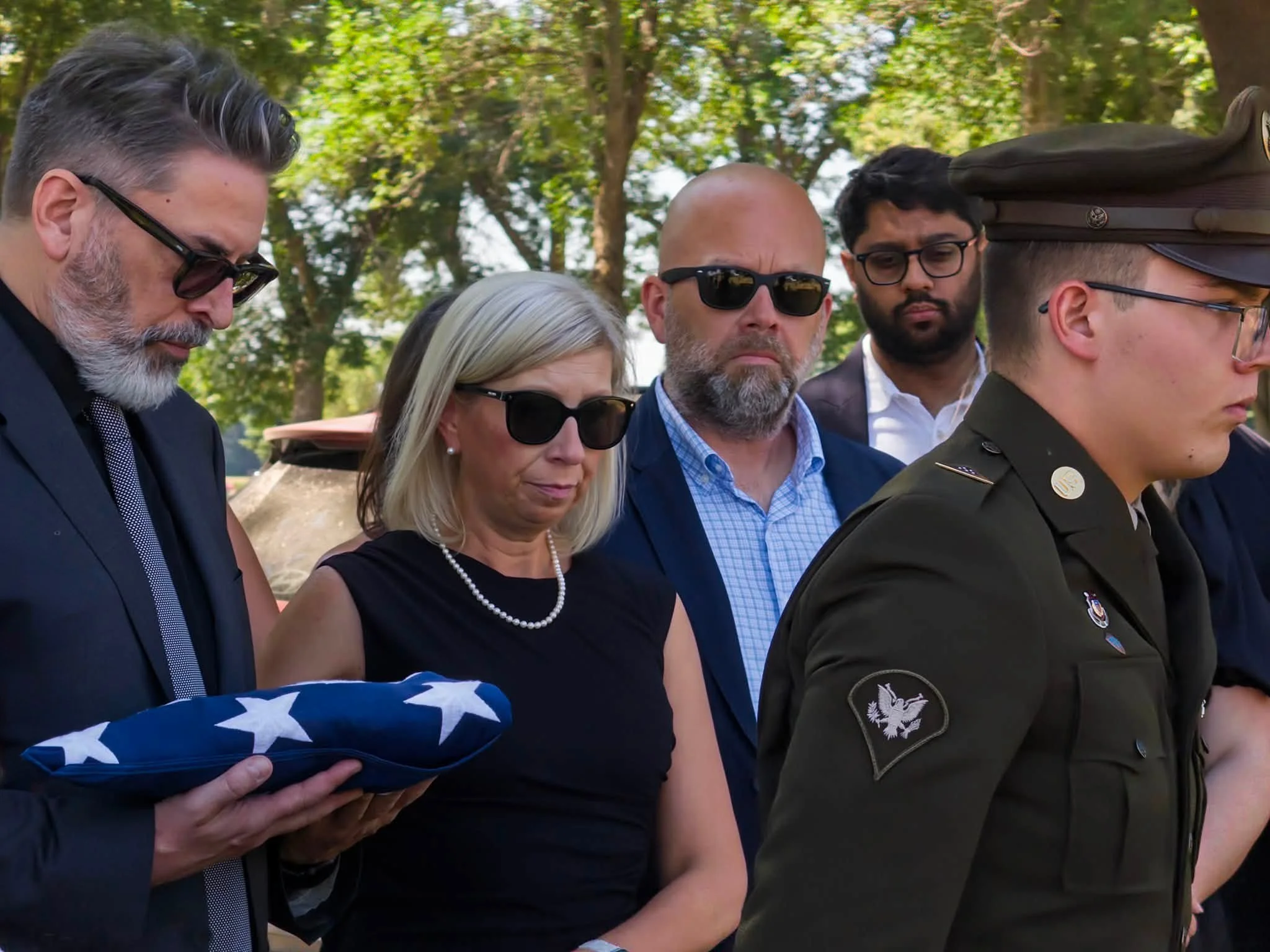
Mom threw a surprise party for Dad the year before she died (2017), and I told them that what I read in front of the party that day was going to be his eulogy. I did not expect to have to write Mom’s eulogy just a few short months later, and I’m grateful I got to read hers to her before she passed. But when we found Dad’s handwritten journals and some of his favorite books a week before his accident—when Mark and Joy and I were here with him for what became those precious last few days together—I knew I needed to update this talk.
So if you were there for that surprise party, you might recognize some of this, but—with apologies, Dad—I’ve added some stuff.
- - -
I want to start by telling you something I noticed when we were going through old photos of Dad in preparation for today.
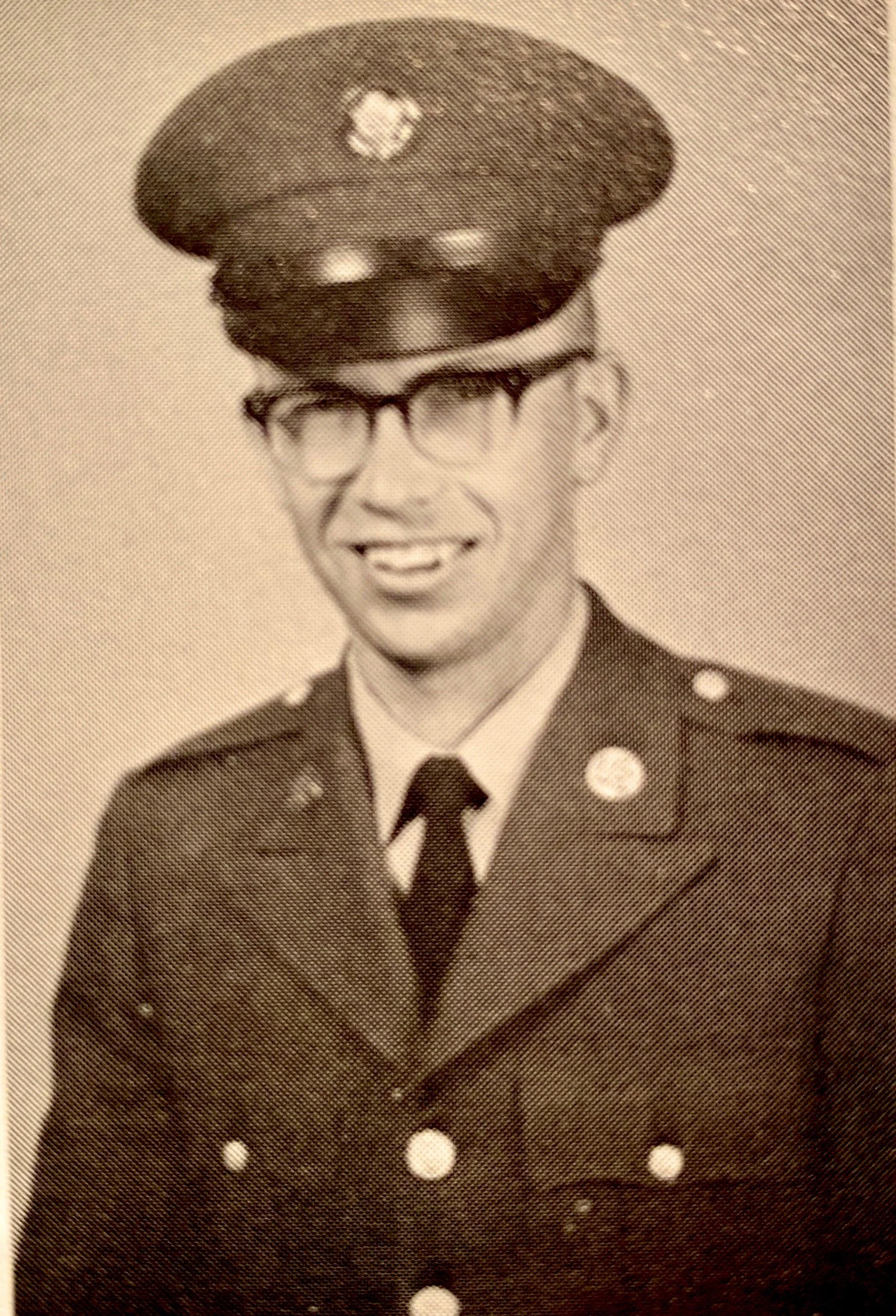
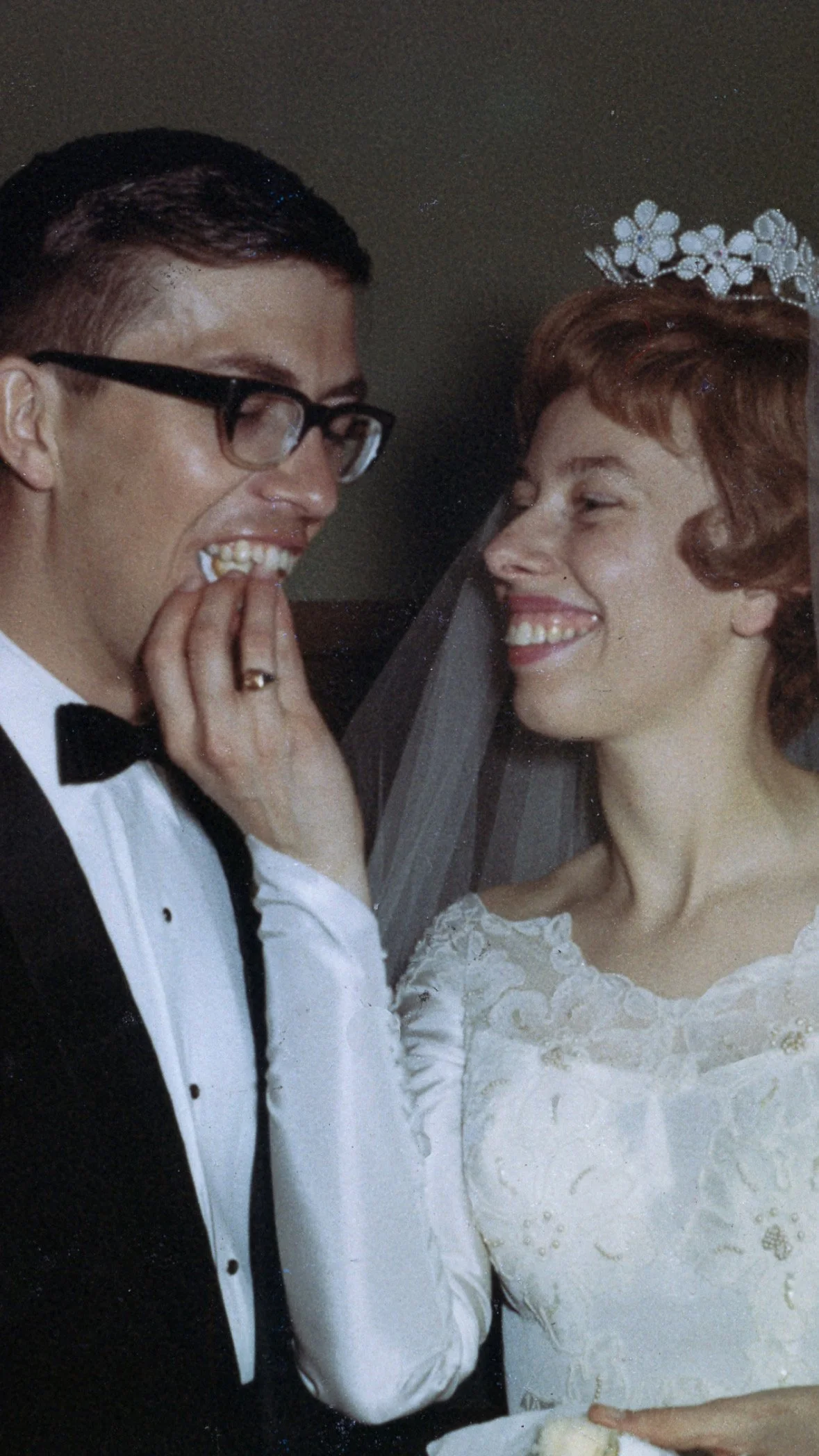
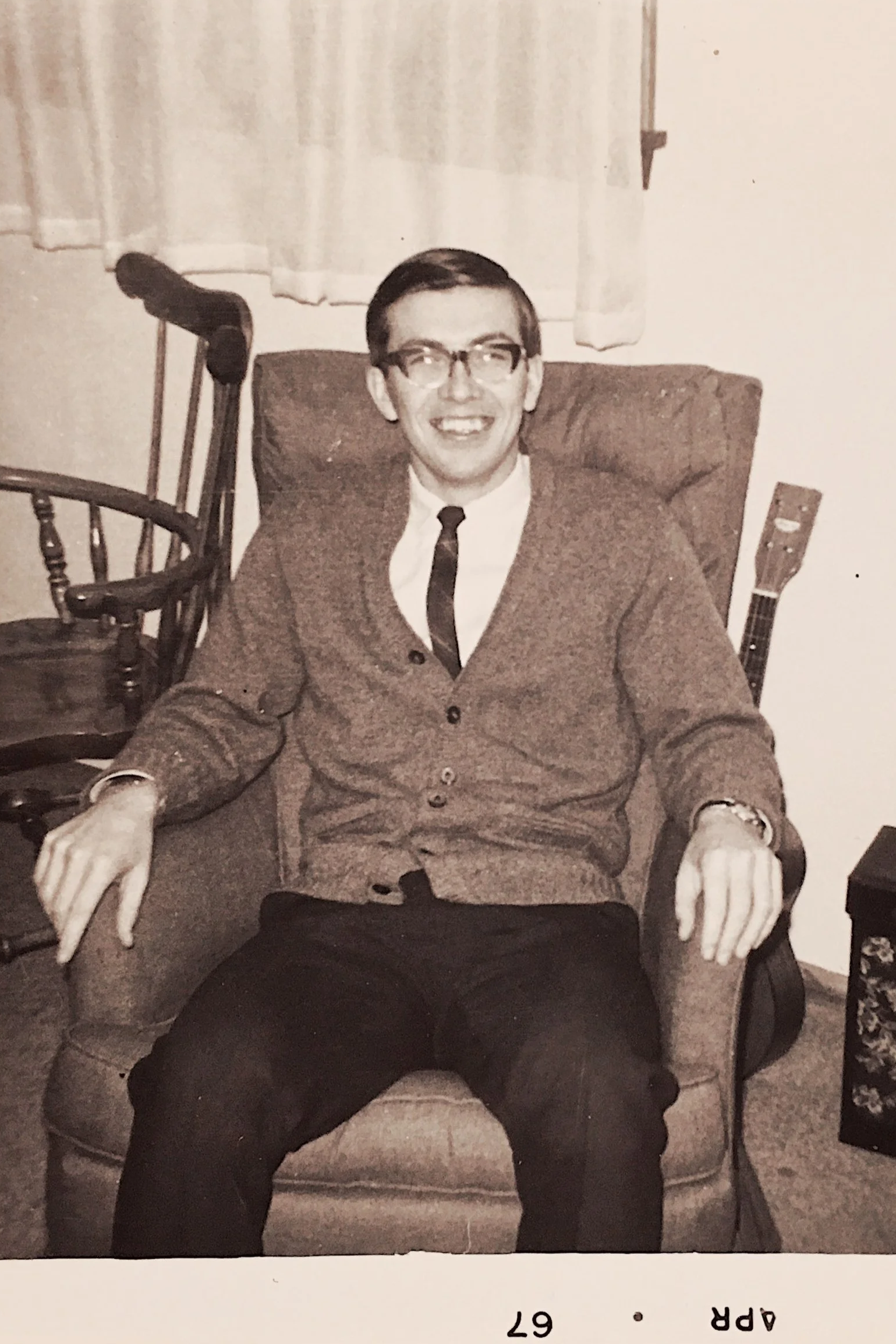
The Carl I see in those pictures—as a baby and a boy in Hatton, in his Army uniform in West Germany, as a young husband and a father learning on the job—those are images of the exact same man I've known my entire life. Same face. Same eyes. Same energy.
A man of consistent character.
There's no great betrayal in his story, no hidden drama, no untold secret, none of the ticking time bomb imagery I hear so many people use when describing their own family backgrounds in private. Invariably, when asked about my dad or my upbringing, people found it hard to believe I had nothing but good things to say about the man who raised me.
So let me finally set the record straight. I do have some grievances.
He did spank me sometimes.
He wouldn't step in and fight my battles for me with the neighborhood bully, much to my mother's chagrin.
He made me walk home from detention in middle school. Google Maps tells me that's 6.4 miles… about two hours and eleven minutes by foot.
Same thing in high school, but Waukesha South was, thankfully, four miles closer to home.
I heard him raise his voice and curse once—once in my entire life—when I had the childish impulse to disrespect the woman he loved while living under their roof.
When I was eighteen he repossessed my car. I wasn't making the payments on the loan he'd made me, so he drove to my apartment in Menomonee Falls and took it back.
… that's pretty much the entire list of grievances. And every single one of them is just him parenting me the best way he knew how. Trying to demonstrate love despite my idiocy and immaturity. I wasn't easy. I know that now as a parent myself.
On the other hand…
Dad, I'm curious about something. "No problem. Here's some books.”
I want to use your computer, Dad. "No problem. Here's some disks.”
Can you turn my twin bed into a loft with Christmas lights? "No problem. How high?”
Can we move my bedroom to the basement? "No problem—but I thought you didn't like spiders.”
Hey Dad, I need a ride home from work. "No problem. What time?”
When I would practice drums for thirteen hours… "Give your mom a break at some point, will ya?”
And then—simply because I saw an ad in the back of a magazine for a tiny recording school in a trailer park—he drove me to Ohio and back in one day. Nine and a half hours each way, just so we could take an hour tour and discover the vocation that became my lifelong passion.
“No problem.”
That was Dad. And that was just the beginning of what I'd come to understand about him.
My dad was born in Northwood, North Dakota on December 11th, 1941… the second youngest of eight kids, to proud Norwegian parents Jerome and Esther Holter of Hatton, ND. Both of them lost their own fathers when they were too young. He knew that, and he wrote about it in his journals with such tenderness, noting that those hardships shaped them into the people they became, the people he loved so deeply.
And I noticed he was already thinking generationally… already tracing the rings of his tree.
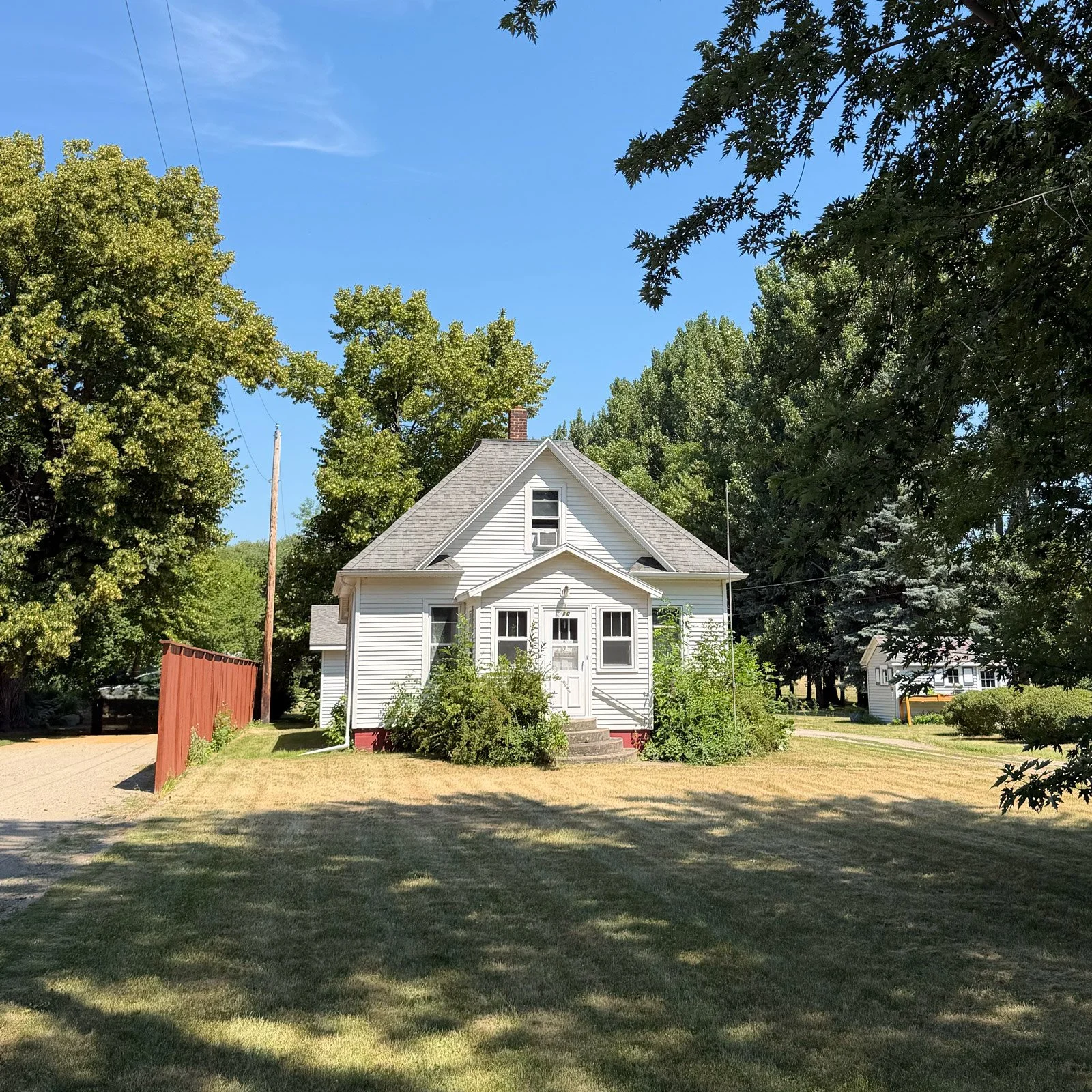
He grew up in a family that knew how to show up. How to do the work. How to love people without making a production of it. They all lived tightly together in a small house built by Grandpa with few bedrooms (and originally an outhouse!). When asked how they managed to make it all work with apparently so little, Dad loved quoting his mother, Grandma Esther, who would remind him “Where there is love, there is always enough.”
He absorbed all of that in North Dakota, carried it through his time in the Army in Germany, Minnesota, Iowa and (thankfully!) on to Wisconsin, and built it into everything that would become his life—the house in Waukesha, his career, his patents, his hobbies, his friends, the family he raised with our mom Jan.
He was an engineer who solved problems not for recognition, but because that's what you did. You showed up, you figured it out, and you made it work. Seven unique patents, worn with his characteristic humility. His first, a Tower Crane design during his time at FMC, largely set aside by him before most people had figured out what they wanted to do with their lives.
He loved puzzles of all kinds so much, he even named his own company Puzzleworks.
He loved birds and wildlife and walking in nature.
He loved woodworking, and took particular pride and care in refinishing family heirlooms, objects that held memories, pieces he felt deserved to be honored and passed on.
He admired Harrison Ford and Tom Selleck and Clint Eastwood. If you know those names you know exactly what that means. Men of few words, high competence, quiet moral authority—characters who do the right thing at personal cost, without asking for recognition. He wasn't watching those movies as mere escapism. I think he was watching his own ideal value system reflected back at him, without maybe even realizing it.
He loved the cousins campouts, those unhurried summers when everyone he cherished most was in the same place at once.
He loved our spouses as much as us three kids.
And he loved our mom Jan, with the kind of steady, faithful devotion that most people only read about and dream about.
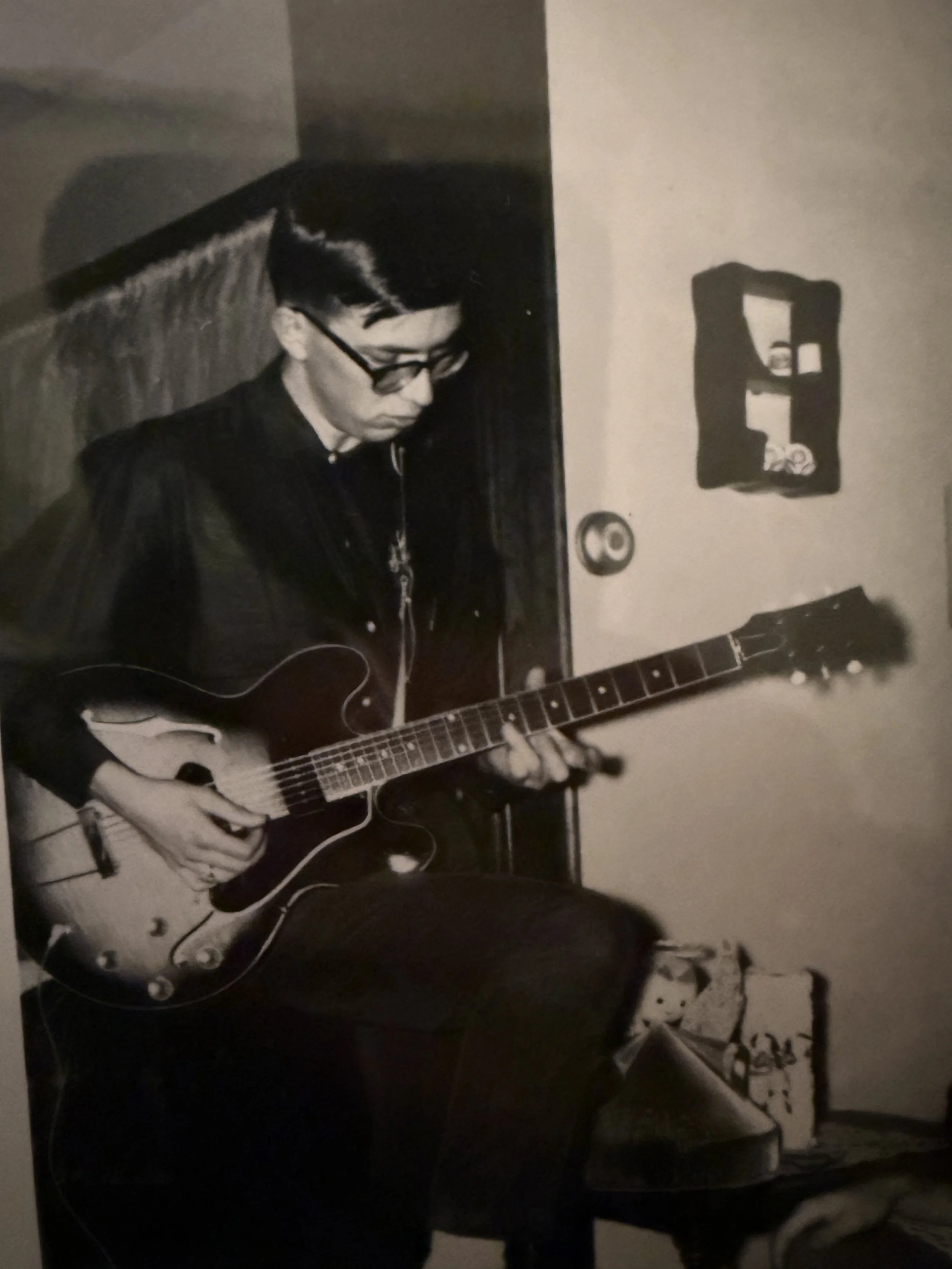
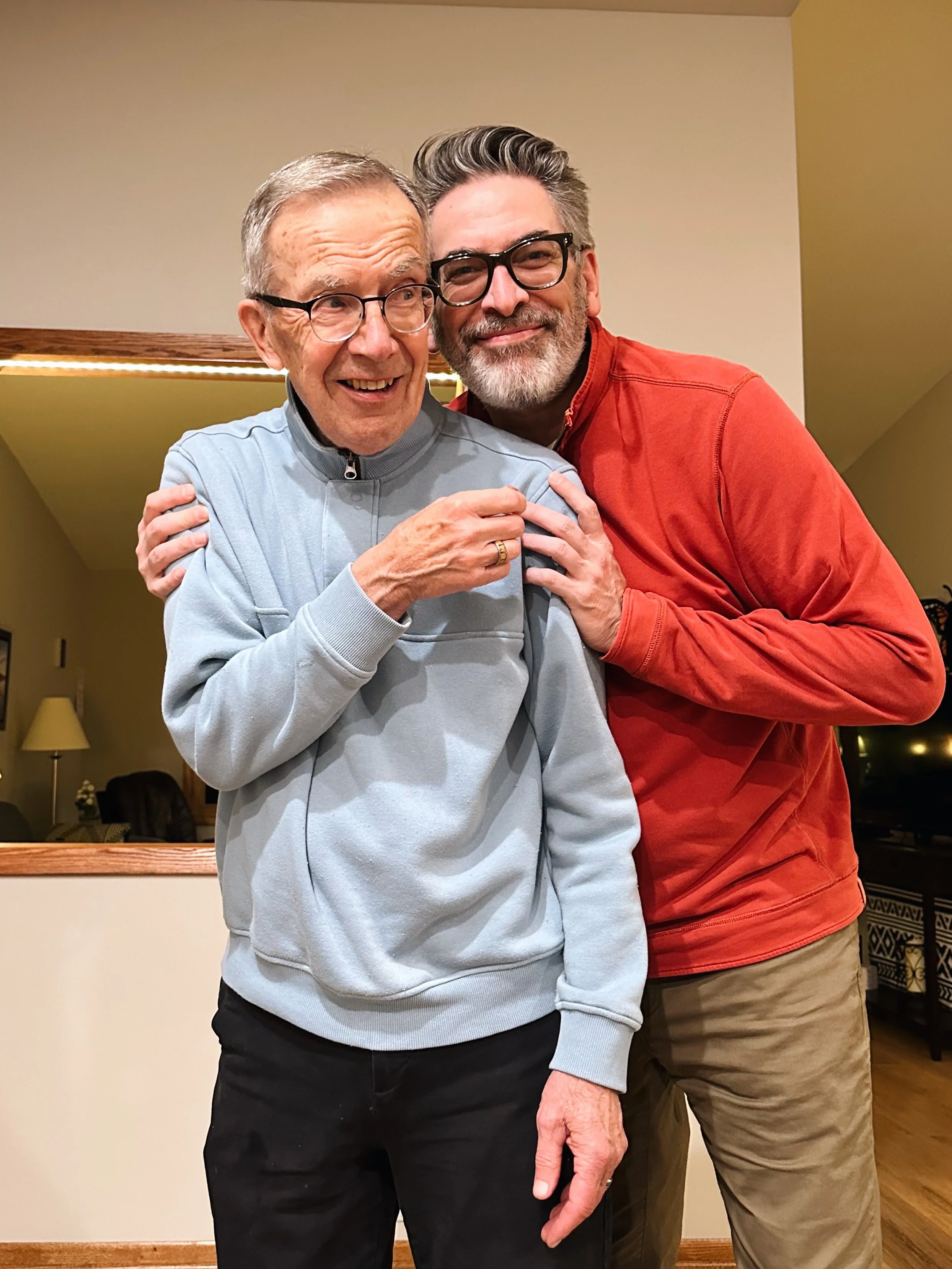
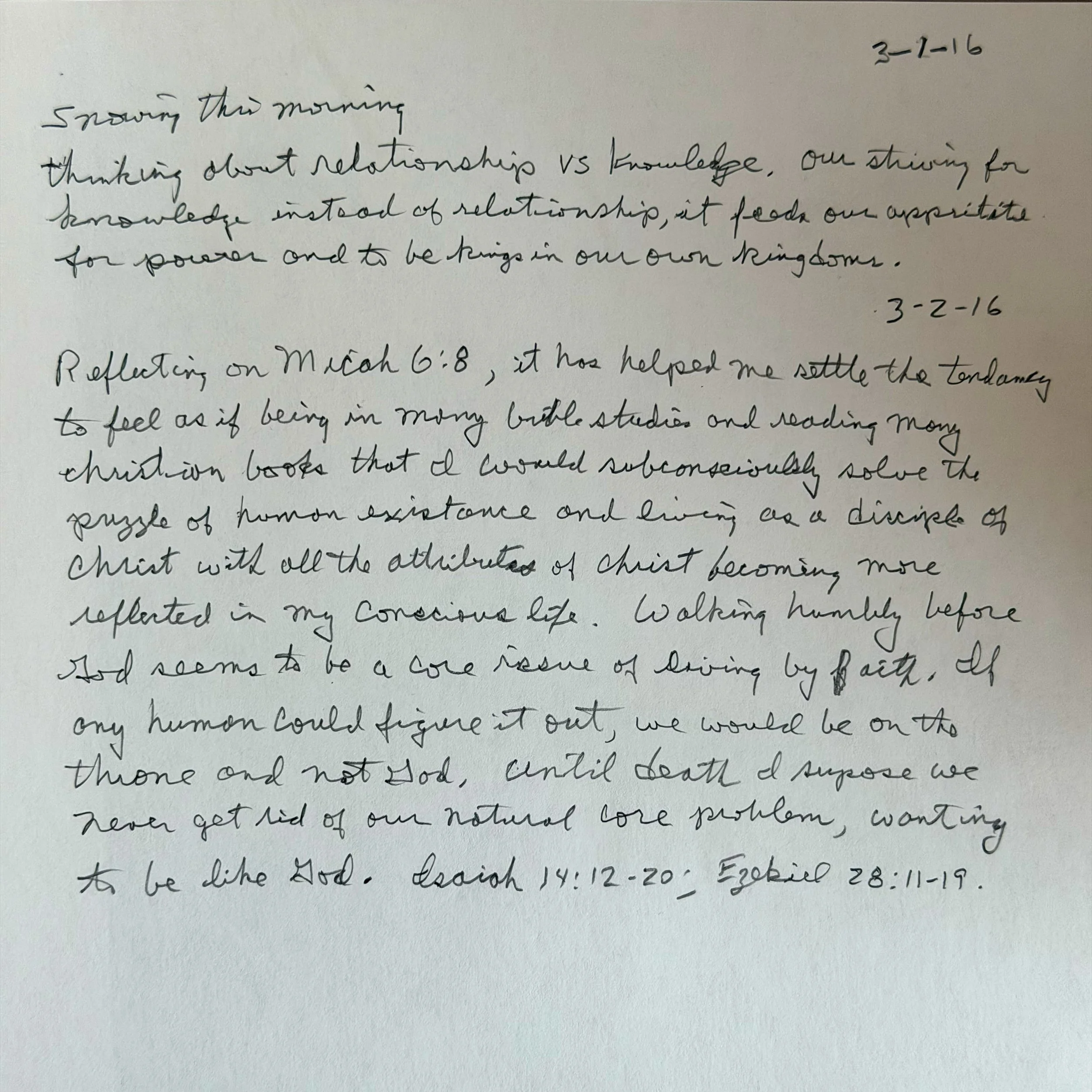
A few weeks ago I sat down with his journals. Pages and pages of private writing—theology, philosophy, belief, dreams, reflections, questions. Writing he did just for himself, in the early mornings, while it was snowing or raining outside, just him and his thoughts and his Bible and whatever book he was working through at the time.
I want to share some of it with you today. Because the man in these pages is the same man you knew—the same gentleness, the same humility, the same steady devotion—but you can begin to discern the whole architecture of it. You can see how deep the roots go, and how hard he worked to tend to what grew from them, over decades, in private, without ever asking for credit.
He wrote a bit about his favorite book, Donald Miller’s Blue Like Jazz. Here’s a highlight quote from that book :
“At the end of the day, when I am lying in bed and I know the chances of any of our theology being exactly right are a million to one, I need to know that God has things figured out, that if my math is wrong we are still going to be okay. And wonder is that feeling we get when we let go of our silly answers, our mapped out rules that we want God to follow. I don’t think there is any better worship than wonder.”
Sure sounds like the Dad I know.
A few years ago we gave him a book of questions to answer, one of those “What Did My Parents Think About (Blank)?” Q&A-style with prompts on all kinds of subjects, many of which remain blank… I wonder if he was still thinking about them, or if he skipped them on purpose for being a bit too personal and revealing, small and seemingly unimportant. But there's a section titled "God and the World." Simple questions, fill-in-the-blank style.
Do you believe in God? He checked Yes and wrote : “yes.” Emphatic. Doubled up.
The book then asks him to describe God. He wrote just four words : "Would not attempt it.”
I don't think that was doubt. I think that was reverence. That's an engineer who understood the limits of his tools.
What religion were you raised with? He wrote: "Lutheran is too broad.” I actually think he meant “too narrow” based on his other writings there, but we all know Mom was the word master in the family.
Do you practice this religion? He checked No, and wrote : "I attempt to exercise my Faith.”
Not practice a religion. Exercise his faith. The distinction mattered enormously to him.
Two more short quotes from his favorite book :
“What I believe is not what I say I believe; what I believe is what I do.”
“I want my spirituality to rid me of hate, not give me reason for it.”
He was wrestling with this for at least twenty years in those journals of his—uncomfortable with what he called "Americanized Christianity," hungry for something more genuine than what the institution offered, circling back again and again to a single verse from the Bible.
Micah 6:8… "What does the Lord require of you but to do justice, love kindness, and walk humbly.”
That was Dad's operating manual. Not a doctrine, not a denomination. Just that… Do the work. Love people. Stay humble.
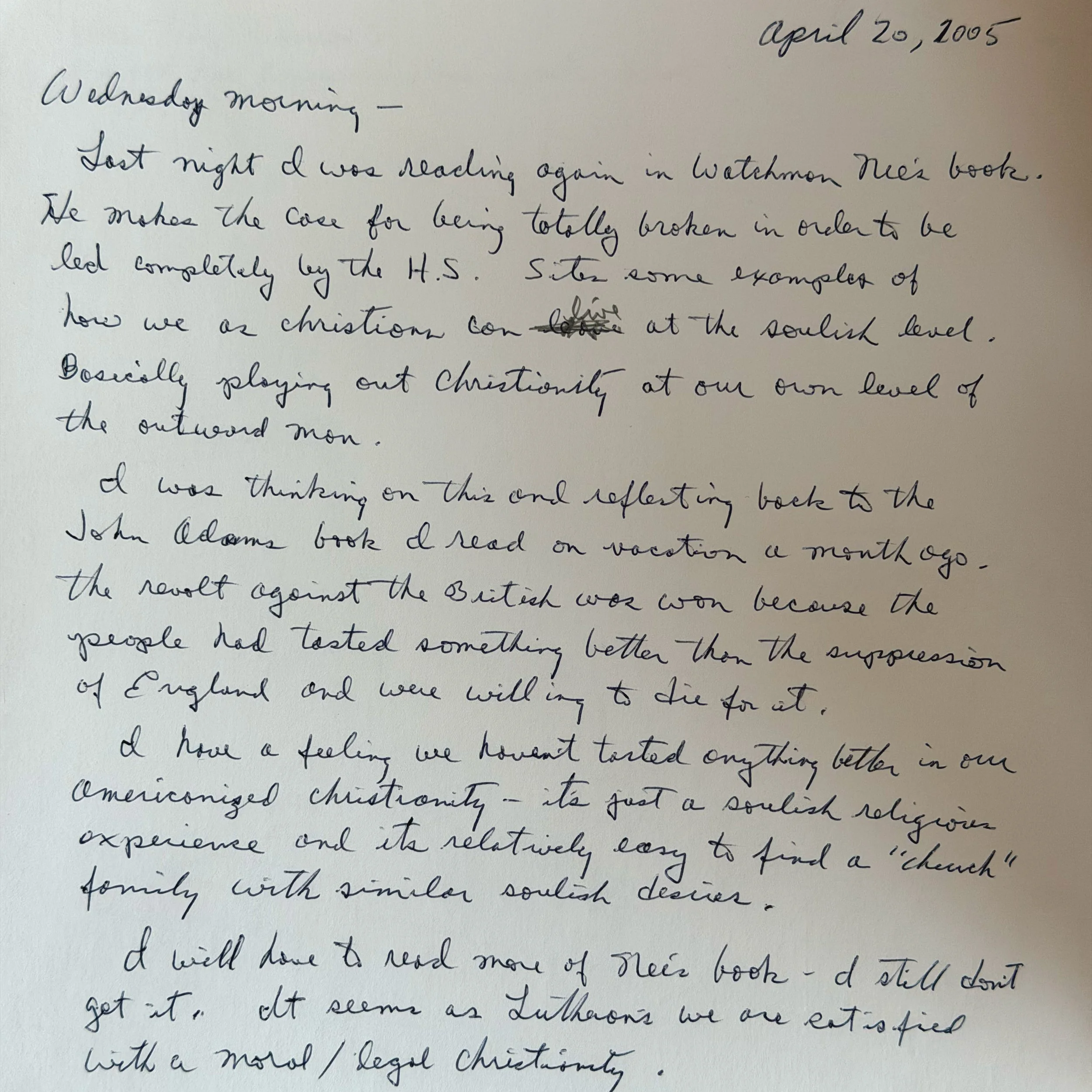
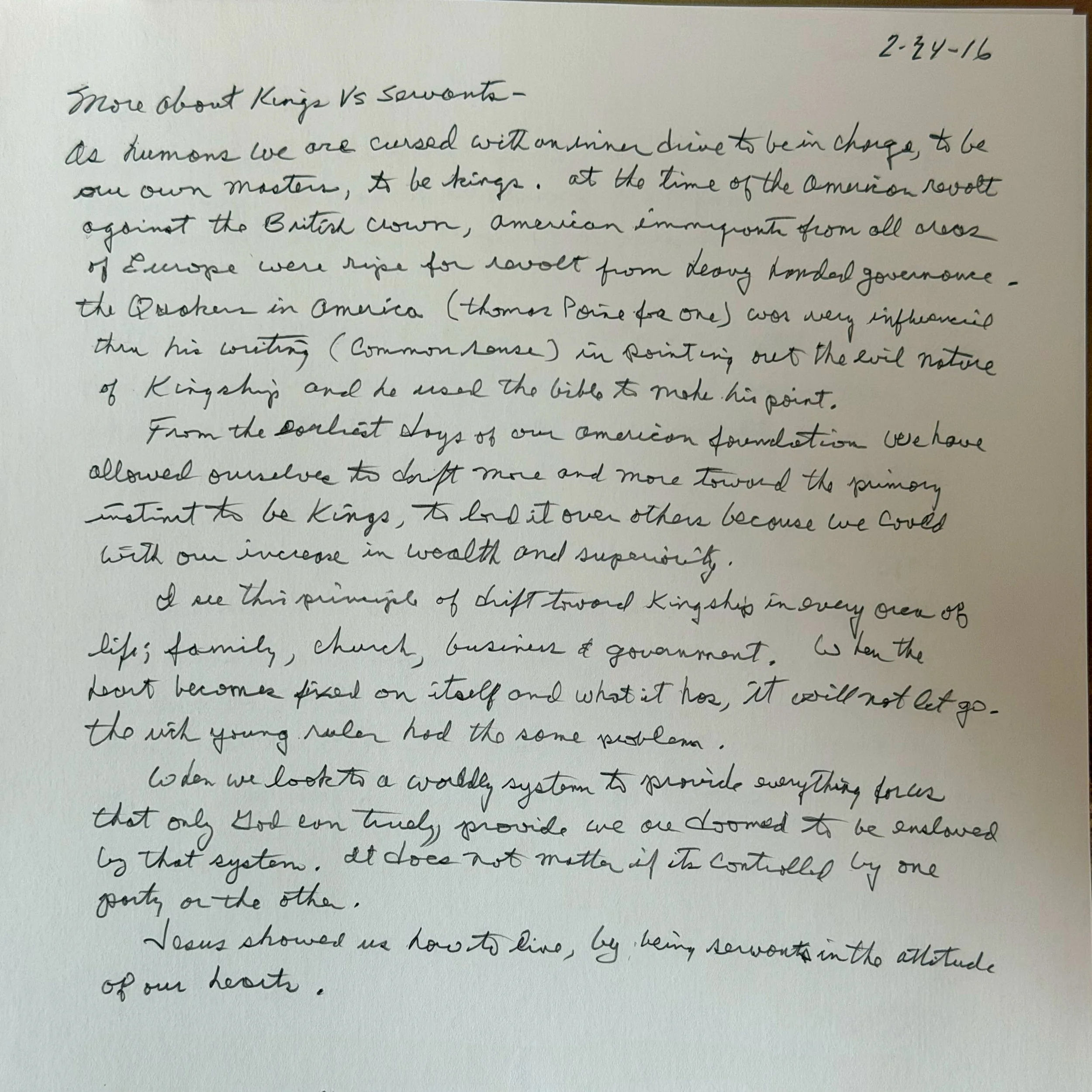
In February of 2016 he wrote, privately, for nobody but himself: "Jesus showed us how to live, by being servants in the attitude of our hearts.”
Servants in the attitude of our hearts. Not performance, not with our actions. Not in the announcements we make or the credit we take. In the attitude of our hearts.
He had disdain for the alternative. He wrote about it passionately and called it “wanting to be a king.” Wanting to be in charge, to be your own master, to lord it over others. He saw it everywhere—in politics, in business, in church. And every single day, quietly, without announcement, he went the other direction.
That was Dad.
A few years ago I was reading Marcus Aurelius—a collection of private writings, philosophical reflections Marcus wrote for himself, to help direct his own growth as a father and a leader and a human being.
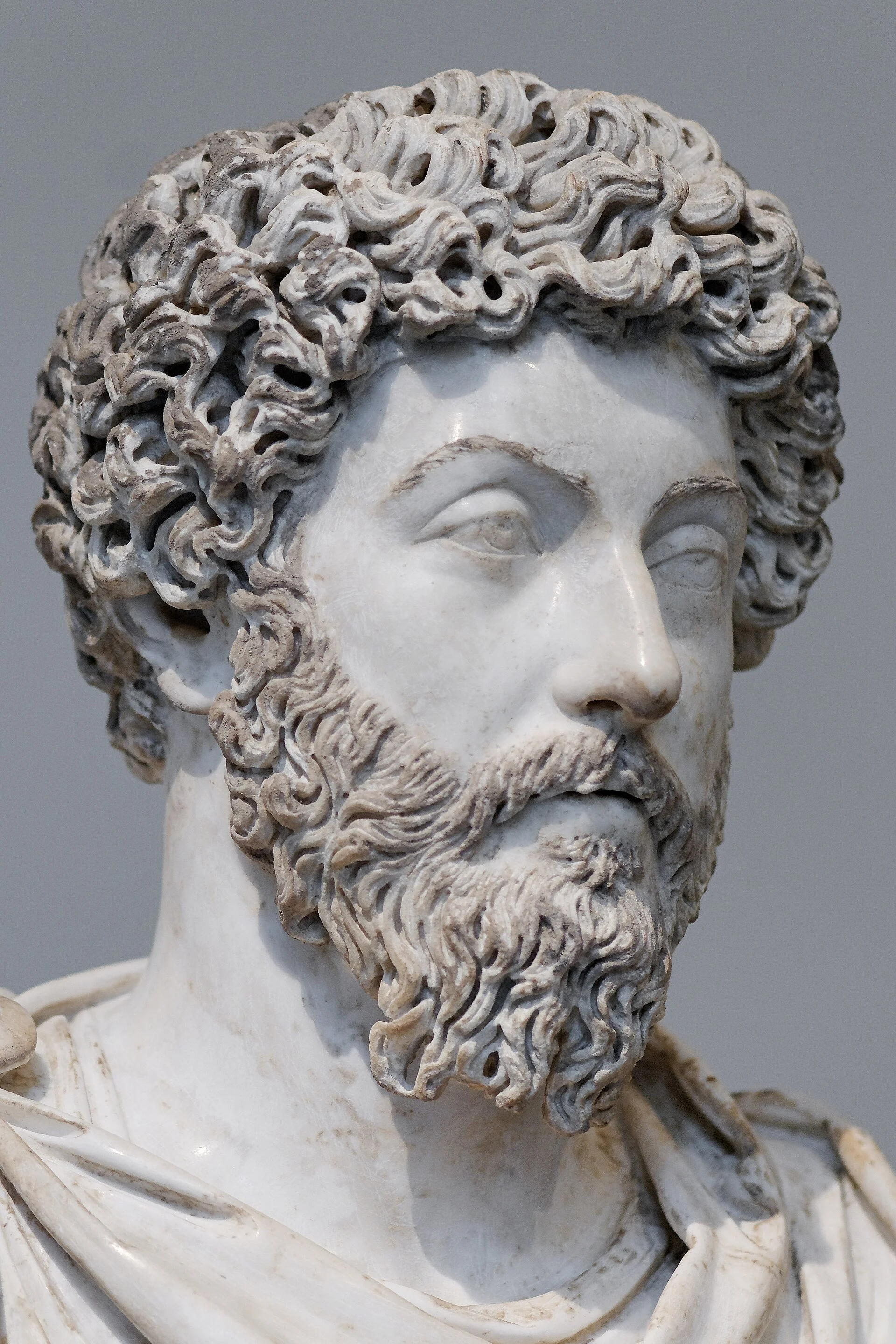
It’s worth remembering that the author was, at the time, literally the most powerful king in the world. And his writing was a reminder to himself not to act like one.
I came across a passage where Marcus writes about his own father, Titus Antoninus. He writes about his energy in doing what was rational. His steadiness in any situation. His sense of reverence. His calm expression. His gentleness. His modesty. His eagerness to grasp things. How he never let things go before he'd examined them thoroughly. How he put up with unfair criticism without returning it. How he couldn't be hurried. His reliability as a judge of character. His constancy as a friend. His piety, without a trace of superstition.
Marcus wrote : "So that when your time comes, your conscience will be as clear as his.”
I read that and I thought—That's my dad. He’s Titus.
Here's what I know now, sitting with his journals, reading his private theology, holding handwritten pages where he wrote about faith, nature, his friends, his family, and grandkids, recognizing that Mom was fading from his dreams, and the state of his heart and the nation :
Marcus Aurelius was writing about his father in Rome in 170 AD. Dad was writing about the same things—servants vs kings, relationship vs knowledge, walking humbly—in his journal in Wisconsin in 2016. Two men, separated by two thousand years, working out the same quiet philosophy in private, and living it in public without ever announcing it.
Consistent character. All the way down. All the way back.
I know there's a temptation to treat today as a kind of final word on Carl Holter. I felt it myself when preparing these remarks… still tweaking on my flight here this week. Felt the pressure of getting it just right, of saying all of the things that capture him completely, as though the measure of this afternoon is whether we find the perfect sentence to contain him.
But here's the truth… this is not the final word on Carl Holter. This isn't a coda. This isn't the finale. This is a chapter marker—a moment where we pause, look up from the page, and can take stock of his story so far.
Because the legacy he gave us is a living thing. It's in this room right now. It's in every person he loved who is sitting here carrying something he gave them—his patience, his humor, his way of showing up without being asked, his "no problem" said one more time. The tree he grew from those North Dakota Norwegian roots is still growing. The limbs are reaching ever further. Every one of his grandchildren is a branch he never stopped tending and caring for, right up until the end of his time here.
The rings of his tree keep forming in the people he shaped. This is not an ending. We are him, becoming a forest canopy.
Once more, from that book of prompts he was answering… Under “Death is:” he wrote "Final for the body but not my soul.”
And responding to “How you picture the end of the world:” he wrote two words : "I don’t."
That was Dad. Why borrow trouble? Why picture endings when there is work to do and people to love and problems to solve and a room that needs someone to make everyone laugh with a silly hat or outlandish outfit?
Despite his occasional goofy gags, he was never looking to be the center of any room he was in. But he filled every single one of them, and the hearts of everyone assembled, with goodness, laughter, generosity, kindness, and love.
We were lucky enough to get so many years with this humble but mighty oak tree. And I think I speak for all our family here when I say that we are still, and will always be, discovering just how far and wide these branches will grow.
"Den største arven du gir, er hvordan du lever.”
The greatest legacy you leave is how you live.
He was, in every way that mattered, our greatest inheritance.